How to Avoid a UTI: Practical Prevention Habits That Actually Help
Urinary tract infections are one of the most common reasons people end up in urgent care, and for some, they are not a once-in-a-while problem. Roughly 1 in 2 women will have at least one UTI in her lifetime, and a meaningful share deal with them again and again. Understanding what actually lowers the risk, separate from the folk remedies and half-truths that circulate online, is the first step toward fewer interruptions.
This is a practical, everyday guide to UTI prevention: what the research and clinical experience actually support, and where a targeted supplement like D-Mannose fits into that picture.
Start with hydration, but be specific about it
"Drink more water" is the most repeated UTI advice for a reason: diluted urine and frequent urination both help flush bacteria out of the urinary tract before it has a chance to take hold. The general guidance is at least 50 ounces (about 1.5 liters) of fluid a day, more if you are active or in a hot climate. If your urine is consistently dark yellow, that is a signal to drink more, not a symptom to ignore.
Do not hold it
Waiting too long to urinate gives any bacteria present more time to multiply in a warm, static environment. Emptying your bladder every few hours, even when you are busy, is one of the simplest and most overlooked prevention habits.

Urinate after sex
Sexual activity is one of the most common triggers for UTIs, particularly in women, because it can introduce bacteria near the urethra. Urinating within about 30 minutes afterward helps clear that bacteria out before it can travel further.
Wipe front to back
This is basic, but worth restating: wiping from front to back after using the bathroom or having a bowel movement keeps bacteria from the rectal area away from the urethra.
Reconsider a few everyday habits
A handful of smaller choices add up:
- Breathable underwear and looser clothing reduce moisture buildup, which bacteria favor.
- Unscented products for intimate hygiene avoid irritating the urethra, which can make it more vulnerable.
- Showers over baths, especially during a susceptible stretch, limit prolonged bacterial exposure.
- Changing out of wet swimsuits or workout clothes promptly rather than sitting in them.
None of these guarantee anything on their own, but together they reduce the everyday opportunities bacteria have to reach the urinary tract.
Where D-Mannose fits in
E. coli is responsible for up to 80% of uncomplicated urinary tract infections, making it by far the most common culprit. (Source: PubMed PMID: 30356438)
D-Mannose is a naturally occurring sugar, closely related to glucose, that has been studied for its role in urinary tract comfort. The working theory is straightforward: certain bacteria, including the E. coli strains behind most UTIs, use small hair-like structures to grip the bladder wall. D-Mannose is thought to bind to those same structures first, so the bacteria attach to the sugar instead of your bladder tissue and are cleared out during normal urination.
It is worth being straightforward about where the science stands: several small clinical trials have shown encouraging results, but a 2022 Cochrane systematic review found the existing studies too limited in size and quality to draw firm conclusions either way, and called for larger, better-designed trials. What we can say with confidence is that D-Mannose has a strong safety profile, with mild diarrhea and stomach upset being the only issues reported in the existing research. That combination, a plausible mechanism, generally reassuring early evidence, and a low-risk profile, is exactly why it belongs in a daily prevention routine rather than being treated as a proven cure.
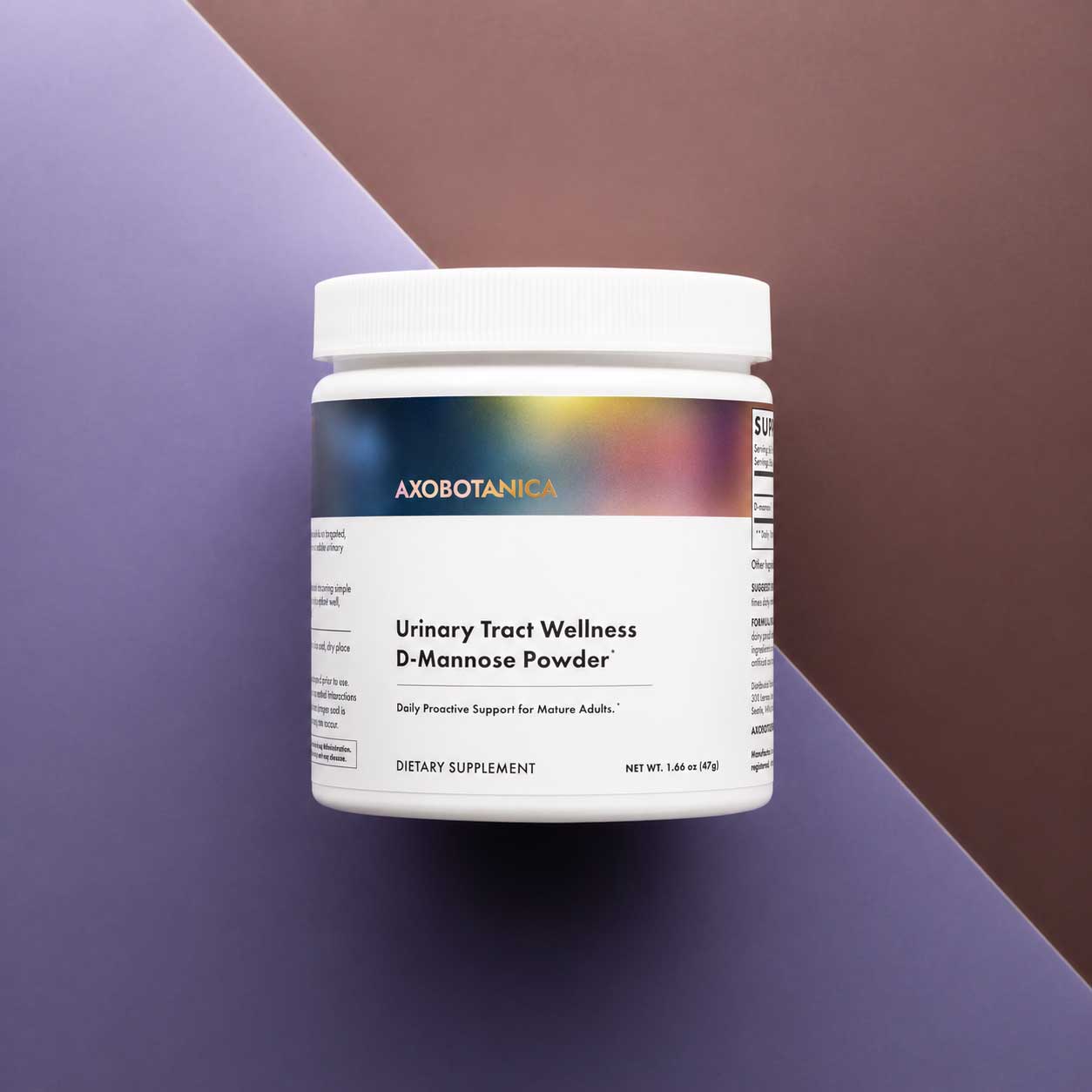
Axobotanica's Urinary Tract Wellness D-Mannose Powder was formulated by naturopathic physician Dr. Chris Chlebowski for exactly this kind of daily, proactive use, in a clean formula made in a cGMP-certified, FDA-registered U.S. facility, with no fillers or binders. For a deeper look at the mechanism, including how D-Mannose interacts with bacterial biofilms, see D-Mannose for E. coli: How to Naturally Flush Urinary Bacteria.
When to talk to a doctor
Prevention habits reduce risk, they do not eliminate it. If you are experiencing burning during urination, a persistent urge to go, cloudy or strong-smelling urine, or pelvic discomfort, those are reasons to check in with a healthcare provider rather than wait it out. The same goes if UTIs keep recurring despite consistent prevention habits. Your provider can look for an underlying cause and talk through whether a daily D-Mannose routine makes sense alongside whatever else they recommend.
Frequently asked questions
Does drinking cranberry juice prevent UTIs?
The evidence for cranberry juice specifically is weak, in part because most juice is too diluted and sugary to deliver a meaningful dose. Concentrated cranberry supplements have somewhat more support, though the research is mixed.
How much D-Mannose should I take for prevention?
This varies by product and by person, and the label instructions on Urinary Tract Wellness D-Mannose Powder are the best starting point. Talk to your doctor about a routine that fits your history, especially if you deal with recurrent UTIs.
Can men get UTIs too?
Yes, though they are less common in men than women due to anatomical differences. The same prevention habits apply.
Why Axobotanica?
We didn’t just build the best supplement; we built a standard. Our formula is physician-formulated, clean-label, and designed for those who refuse to wait for a "silent" problem to become a loud one.
Important Medical Disclaimer: Because everyone’s health situation is unique—especially with complex conditions or medications—we’re not able to say whether this product is appropriate or safe for you personally. Please consult your licensed healthcare provider before using this or any supplement. Our products are dietary supplements and are not intended to diagnose, treat, cure, or prevent any disease, and these statements have not been evaluated by the Food and Drug Administration.