BPH vs. Prostate Cancer: 3 Things The Research Says You Should Know
For many men, the first urinary symptom brings fear. Is this cancer? This worry is very common. It concerns BPH vs prostate cancer. This keeps men from doctors too long.
The truth is more reassuring than expected. But it is also nuanced. Here is what research shows about BPH and prostate cancer.
1. THE SYMPTOMS OVERLAP BECAUSE OF WHERE THE PROSTATE SITS, NOT BECAUSE THE CONDITIONS ARE THE SAME
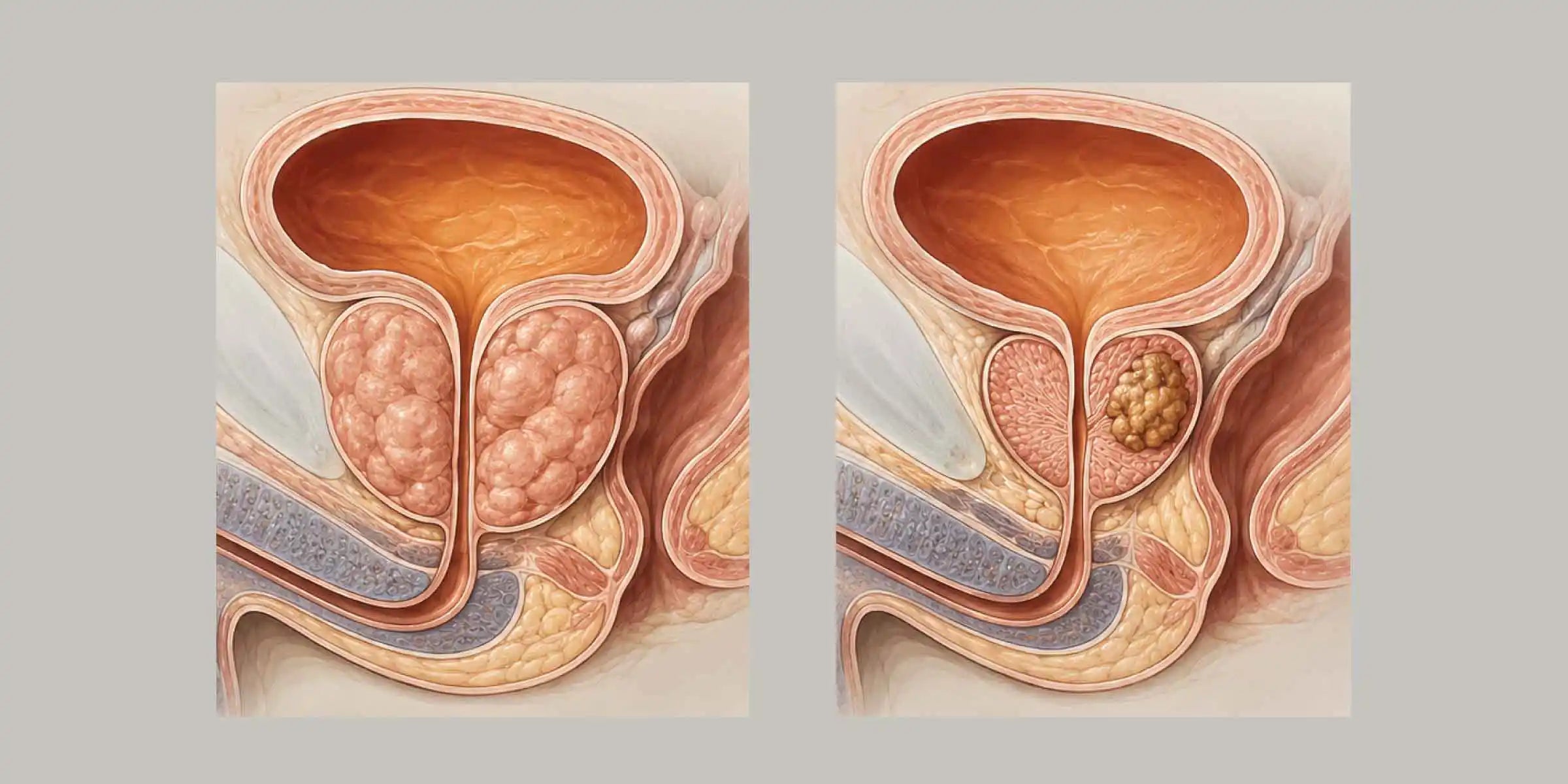
BPH and prostate cancer have similar urinary symptoms. These include weak stream and frequent urination. Also, trouble starting or stopping, and nighttime trips. This is not due to a relationship between them. It is because of simple anatomy.
The prostate wraps around the urethra. Tissue growth can press on the urethra. This is true for BPH or cancer. This causes similar urinary effects. The symptom feels the same to the person. But the underlying biology differs.
What this means: a urinary symptom alone cannot tell you, or your doctor, which condition is present. That distinction requires actual testing, not guesswork based on how you feel.
2. BPH vs prostate cancer: BPH DOES NOT INCREASE YOUR RISK OF PROSTATE CANCER
This is the question underneath the fear, and it has a clear answer in the research.
A widely cited clinical review concluded that BPH is not a known risk factor for prostate cancer, even though the two conditions frequently coexist in the same men. Age is the strongest predictor of prostate cancer risk, followed by family history, not the presence of BPH. The review is direct on this point: BPH is not considered a precursor to prostate cancer, and having one does not mean the other is coming.
What this means: the two conditions are common for the same reason, both become more likely simply because the prostate changes with age, not because one causes or leads to the other. It is entirely possible, and common, to have BPH without ever developing prostate cancer.
3. DOCTORS TELL THEM APART WITH SPECIFIC TESTS, NOT SYMPTOMS
Because symptoms cannot distinguish the two conditions, doctors rely on a small set of specific tools instead.
- PSA (prostate-specific antigen) blood test: measures a protein your prostate produces. Elevated levels can suggest cancer, but PSA can also rise from BPH, infection, or recent activity, so an elevated result starts a conversation, it does not confirm a diagnosis on its own.
- Digital rectal exam (DRE): allows a physician to physically assess the size, shape, and texture of the prostate.
- Biopsy: the only test that can confirm a cancer diagnosis with certainty, typically ordered when PSA or DRE results raise a specific concern.

Current guidance from the U.S. Preventive Services Task Force generally centers PSA-based screening decisions around ages 55 to 69, as an individual, shared decision between a man and his physician, with earlier screening often recommended for men with a family history or other elevated risk factors.
What this means: the only way to know what is actually happening is to get evaluated. Guessing based on symptoms alone, in either direction, is not reliable.
WHAT TO DO WITH THIS INFORMATION
- Don't let fear of a cancer diagnosis delay a conversation with your doctor. In most cases, urinary symptoms are BPH, a common and manageable condition, not cancer.
- Know your risk factors. Family history and race meaningfully affect when screening conversations should start, so bring your family history to that appointment.
- Ask about a baseline PSA if you're in your mid-40s to 50s, particularly with any elevated risk factors, so you and your doctor have a reference point over time.
- Track your symptoms, including when they started and whether they're changing, since that pattern is genuinely useful information for your physician.
If nighttime urination or other symptoms are what brought you here, our guides on 4 Reasons You Keep Waking Up To Pee At Night and 3 Things The Research Actually Shows About Saw Palmetto cover the most common causes and what the evidence supports. At Axobotanica, our Targeted Prostate Flow formula, designed by Dr. Chris, is built to support healthy prostate function as part of a proactive approach, alongside, not instead of, regular screening with your physician.
IMPORTANT MEDICAL DISCLAIMER
This article is for educational purposes only and is not medical advice. Your symptoms must be evaluated by your healthcare provider, who considers your full medical history, medications, and overall health status. Never adjust your medications or treatment plan based on this information alone.
These statements have not been evaluated by the FDA. This product is not intended to diagnose, treat, cure or prevent any disease.