4 Reasons You Keep Waking Up To Pee At Night
With years of clinical experience in genitourinary health, we hear the same frustration constantly: it isn't the daytime symptoms that wear men down, it's the nights. Waking to pee two or three times, then struggling to fall back asleep, then feeling the effects the next day at work or with family.
Nocturia, the medical term for waking at night to urinate, is one of the most common and most under-discussed symptoms in men's health. It is more than a sleep inconvenience. Fragmented sleep affects hormone regulation, cardiovascular health, mood, and next-day cognitive function, and men who wake three or more times a night are also at meaningfully higher risk for falls and fractures during those nighttime trips, a risk driven by grogginess, low light, and disrupted balance.
Here are the four most common reasons behind it, and what a proactive approach looks like.
1. AN ENLARGING PROSTATE
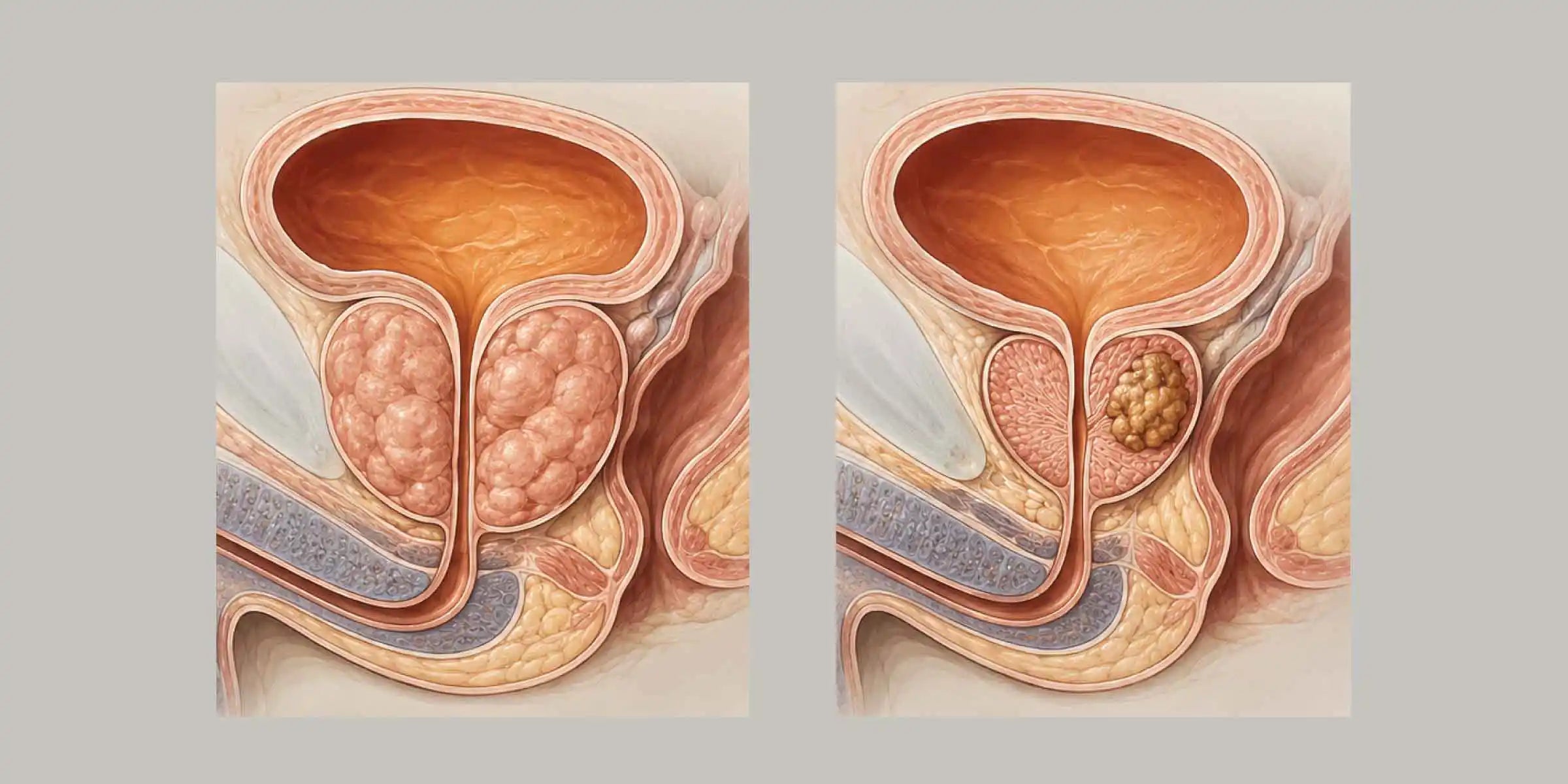
Your prostate sits directly beneath the bladder and wraps around the urethra. As it grows with age, a normal process called benign prostatic hyperplasia (BPH), it can press against that channel and interfere with how completely and efficiently the bladder empties.
- The bladder never fully empties during the day, so it fills to capacity faster at night, triggering more frequent wake-ups
- In some men, the bladder muscle itself becomes overactive from working harder against that narrowed passage
- Nocturia remains one of the most frequent lower urinary tract symptoms reported by men with BPH, and is often the earliest sign that prompts men to see a doctor
2. EVENING FLUID, ALCOHOL, AND CAFFEINE HABITS AND WAKING TO PEE
What and when you drink in the hours before bed has an outsized effect on how many times you wake up.
- Evening fluid timing: Drinking large volumes of any liquid within two to three hours of bed
- Alcohol: Acts as a diuretic and can irritate the bladder lining
- Caffeine: Has the same diuretic and irritant effect, and lingers in the system longer than most men expect

3. HIGH SODIUM INTAKE
Sodium plays a direct role in how much fluid your body holds onto during the day and releases at night.
- High sodium intake causes the body to retain fluid during the day and release it overnight, increasing nocturnal urine volume
- Dietary sodium restriction has been shown to significantly reduce nocturnal voiding frequency in patients with nocturia
- Processed and packaged foods are the largest hidden source of excess sodium in most men's diets
4. UNTREATED SLEEP APNEA
This is the cause most men never think to consider, and one of the most overlooked.
- Obstructive sleep apnea disrupts the hormones that regulate nighttime fluid balance
- A meta-analysis found men with obstructive sleep apnea to be at significantly higher risk of nocturia
- If nocturia is paired with loud snoring, daytime fatigue, or witnessed breathing pauses during sleep, a sleep evaluation is worth raising with your doctor
WHAT TO DO ABOUT IT
Supporting healthy prostate and bladder function starts with a few foundational shifts:
- Shift your fluid timing, not your total intake. Front-load hydration earlier in the day rather than restricting water overall. Read our companion guide, 5 Facts About Hydration and Kidney Health: A Clinical Guide, for how to structure intake across the day.
- Limit alcohol and caffeine in the evening, particularly in the four hours before bed.
- Moderate sodium, especially from processed and packaged foods, to reduce overnight fluid shifts.
- Track your pattern for two weeks. Note how many times you wake and roughly when. This single piece of information is one of the most useful things you can bring to a physician.
- Talk to your doctor if it is new, worsening, or paired with other symptoms like a weak stream, urgency, or discomfort. Nocturia can also occasionally point to conditions unrelated to the prostate, so a proper evaluation matters.
WHAT TO DO WITH THIS INFORMATION
Nocturia is common, but common does not mean it should be ignored. It is one of the most actionable early signals your body gives you about prostate and bladder health, precisely because it is so noticeable.
If nighttime urination is a regular part of your life, the next step is a conversation with your physician or a urologist to understand what is driving it and to rule out other causes.
At Axobotanica, we believe in supporting the body's natural genitourinary function before symptoms become disruptive. Our Targeted Prostate Flow formula is designed by Dr. Chris to complement the lifestyle changes outlined here, with clinical-grade dosing and nothing else. You can also read more about what is a uACR test and why early detection matters for the broader picture of genitourinary health.
IMPORTANT MEDICAL DISCLAIMER
This article is for educational purposes only and is not medical advice. Your symptoms must be evaluated by your healthcare provider, who considers your full medical history, medications, and overall health status. Never adjust your medications or treatment plan based on this information alone.
These statements have not been evaluated by the FDA. This product is not intended to diagnose, treat, cure or prevent any disease.