Article: Cranberry vs. D-Mannose: What the Research Actually Shows

Cranberry vs. D-Mannose: What the Research Actually Shows
If you've ever had a urinary tract infection, someone has probably told you to drink cranberry juice. More recently, D-mannose has become just as popular, and many people now wonder which one is worth their money.
Cranberry and D-mannose both aim to do the same job: help keep bacteria from settling into the urinary tract. They do it in different ways, and the research behind each one tells a different story. Here's an honest look at how they compare, what the studies actually show, and how to decide what fits your routine.
How Cranberry Works
Most urinary tract infections are caused by E. coli, bacteria that normally live in the gut. To cause trouble, they need to attach to the lining of the bladder and urinary tract using tiny hair-like structures called fimbriae.
Cranberries contain compounds called proanthocyanidins, or PACs. The type found in cranberries (A-type PACs) appears to interfere with one kind of fimbriae, called P-fimbriae, making it harder for bacteria to grip the urinary tract wall. Cranberry doesn't kill bacteria. It makes them less able to hold on.
How D-Mannose Works
D-mannose is a simple sugar found naturally in small amounts in fruits like apples and peaches. Unlike most sugars, much of it passes through the body and ends up in the urine rather than being used for energy.
E. coli also use a different set of fimbriae, called type 1 fimbriae, which latch onto mannose-containing structures on the bladder wall. When D-mannose is present in the urine, bacteria can bind to it instead and get flushed out when you urinate. We explain this in more detail in D-Mannose for E. coli: How to Naturally Flush Urinary Bacteria.
Both are anti-adhesion approaches: they make it harder for E. coli to grip the urinary tract wall. The difference is which grip they target. E. coli has more than one type of fimbriae, and D-mannose and cranberry each work on a different one. That’s one reason some people use them together.

What the Research Shows
Cranberry
Cranberry has the larger body of research. A 2023 Cochrane review, one of the most rigorous types of analysis in medicine, looked at 50 randomized trials with nearly 9,000 participants. It found that cranberry products reduced the risk of symptomatic UTIs by about 30% overall compared with placebo or no treatment.
The benefit showed up most clearly in three groups:
- Women with recurrent UTIs (about 26% lower risk)
- Children
- People prone to UTIs after a medical procedure
The same review found little or no benefit for older adults living in care facilities, pregnant women, and people with bladder-emptying problems caused by nerve conditions.
D-Mannose
D-mannose research is newer and more mixed. An early trial from 2014 followed 308 women with a history of recurrent UTIs. Those taking 2 grams of D-mannose daily had far fewer recurrences over six months than those taking nothing (about 15% compared with about 61%).
In 2024, a larger trial called MERIT tested the same daily dose against a placebo in 598 women in UK primary care. After six months, 51% of the D-mannose group and 56% of the placebo group had another suspected UTI. That difference was too small to count as a clear benefit.
Cranberry vs. D-Mannose at a Glance
| Cranberry | D-Mannose | |
| Active compound | Proanthocyanidins (PACs) | A simple sugar |
| How it works | Blocks P-fimbriae attachment | Binds type 1 fimbriae so bacteria flush out |
| Research base | 50 trials in a 2023 Cochrane review | Smaller and newer, with mixed results |
| Clearest evidence for | Women with recurrent UTIs, children, people after procedures | Still developing |
| Common forms | Juice, capsules, concentrated extracts | Powder or capsules |
| Things to watch | Sugar in juice, some medication interactions | Digestive upset at higher doses |
Juice or Supplement?
If you go the cranberry route, the form matters. Cranberry juice cocktail is often more sugar than cranberry, and you'd need to drink a lot of it to reach the PAC amounts used in studies. Many cranberry studies used products standardized to about 36 mg of PACs per day, which is easier to get from a concentrated extract than from juice.
D-mannose is most often taken as a powder dissolved in water, which makes it easy to adjust and free of added sugar.
Who Should Be Cautious
- Blood thinners: Cranberry may interact with warfarin. Check with your doctor before using cranberry products if you take a blood thinner.
- Kidney stone history: Concentrated cranberry products may raise urinary oxalate in some people. Learn more in our Oxalate Management guide.
- Blood sugar: D-mannose is a sugar. Most of it isn't used for energy, but if you have diabetes, talk with your provider first.
- Pregnancy: Talk with your provider before starting either one.
Can You Take Both?
Because cranberry and D-mannose target different bacterial attachment structures, some clinicians suggest using them together. Research on the combination is limited, so it's a reasonable conversation to have with your healthcare provider rather than a proven formula.
When a Supplement Isn't Enough
Neither cranberry nor D-mannose treats an active infection. See a doctor promptly if you have fever, chills, pain in your back or side, blood in your urine, or symptoms that don't improve within a day or two. Men with UTI symptoms and anyone who is pregnant should always be evaluated, since infections in these groups need closer care.
For everyday habits that help lower your risk, read How to Avoid a UTI: Practical Prevention Habits That Actually Help.
Our Approach
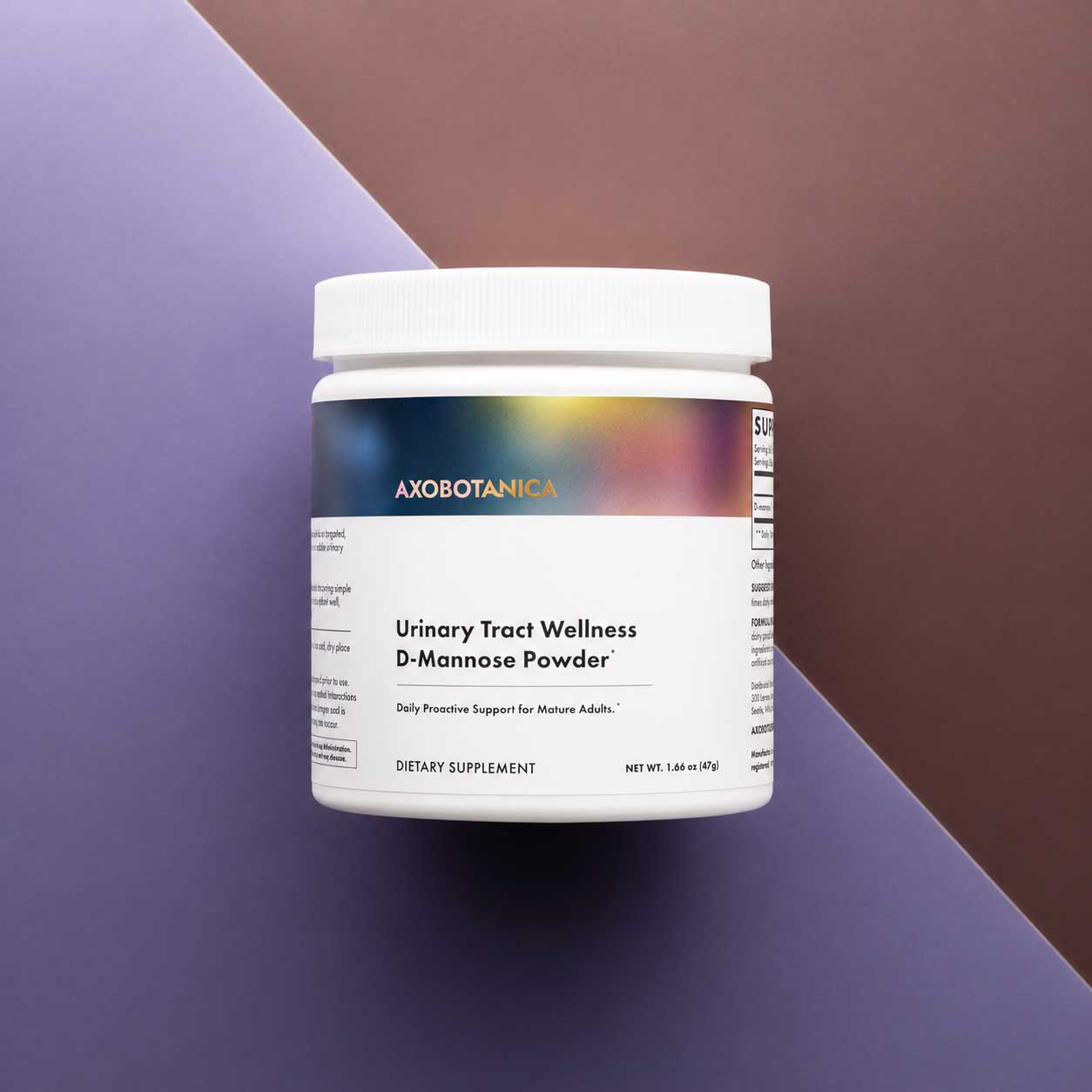
At Axobotanica, we believe you deserve the full picture, including where the research is strong and where it's still catching up. Our Urinary Tract Wellness D-Mannose Powder is a 100% clean, simple powder with no fillers, flow agents, or added sweeteners, designed to support urinary tract health as part of a proactive routine.* It's one tool among several, alongside hydration, healthy habits, and guidance from your provider.
Frequently Asked Questions
Is D-mannose better than cranberry?
D-mannose works through a different mechanism and some people prefer it. And many cranberry juice drinks contain a lot of sugar and relatively little cranberry. Concentrated extracts make it easier to reach the PAC amounts used in research.
Can men take cranberry or D-mannose?
Yes, though most research has been done in women. UTIs are less common in men and often have a different cause, so men with urinary symptoms should see a doctor first.
Can I take cranberry and D-mannose together?
Many people do, since they target different bacterial structures. Combination research is limited, so check with your healthcare provider, especially if you take other medications.
Can cranberry or D-mannose treat a UTI?
No. Both are used to support urinary tract health and help lower the chance of recurrence. An active infection needs to be evaluated by a healthcare provider.
The Bottom Line
Cranberry and D-mannose both work by making it harder for bacteria to stick around. Cranberry currently has the stronger evidence, while D-mannose has a clear mechanism and mixed trial results. The best choice depends on your history, your other health needs, and a conversation with your provider. Whatever you choose, clean ingredients and an honest look at the research are the right place to start.
*These statements have not been evaluated by the Food and Drug Administration. This product is not intended to diagnose, treat, cure, or prevent any disease. This article is for educational purposes only and is not medical advice. Consult your healthcare practitioner with any questions about your health.